What Physical Therapists Should Know About VR Rehabilitation

Two physical therapists can evaluate the same patient and reach very different conclusions about their balance impairments, movement confidence, or rehabilitation readiness.  That variability is one reason virtual reality rehabilitation technology is gaining increased attention within physical therapy.

From neurological rehabilitation and vestibular therapy to orthopedic recovery and balance training, more clinics are exploring how VR rehabilitation may improve patient engagement, objective assessment, measurable outcomes, and overall rehabilitation experiences.

At the same time, virtual reality in rehabilitation is still widely misunderstood.

For many clinicians, the term “VR” immediately brings to mind gaming headsets, entertainment platforms, or consumer fitness applications. While those technologies have helped increase public awareness of immersive technology, clinical VR rehabilitation systems are fundamentally different from consumer gaming products.

For physical therapists, the real question is not whether VR is interesting. The more important question is:  Can VR rehabilitation meaningfully improve rehabilitation outcomes and clinical workflows?

As rehabilitation technology continues evolving, many clinicians are finding that the answer may be yes, particularly when VR is used intentionally to support motor learning, sensory integration, patient engagement, and objective balance assessment.

Key Takeaways

  • VR rehabilitation is designed to support rehabilitation, not entertainment
  • Immersive environments may improve patient engagement and therapy participation
  • VR can support motor learning through feedback, repetition, and progressive challenge
  • Virtual reality is particularly valuable for balance and vestibular rehabilitation
  • Objective assessment and outcome tracking may improve clinical decision-making
  • VR technology should support, not replace, therapist expertise

VR Rehabilitation is More Than Gaming

One of the biggest misconceptions surrounding VR in physical therapy is that it is simply “exercise disguised as a game.” While engagement is certainly one benefit, clinical VR rehabilitation systems are designed around rehabilitation principles – not entertainment.

Unlike consumer VR products, rehabilitation-focused systems often include objective assessment tools, measurable outcome tracking, progressive difficulty adjustments, therapist reporting features, and sensory integration challenges designed specifically for rehabilitation environments.

Some VR systems are designed primarily for entertainment or generalized exercise, while others are specifically developed to support rehabilitation workflows, objective assessment, and therapist-guided progression.

The goal is not simply to entertain patients. The goal is to create immersive rehabilitation environments that support meaningful therapeutic interventions.

Interested in learning what separates clinical VR systems from gaming-based solutions? Download our VR Rehabilitation Buyers Guide, a popular resource for physical therapists evaluating VR rehabilitation technology for their clinics.  

Why Patient Engagement Matters in Rehabilitation

One reason VR rehabilitation has generated so much interest is its potential impact on patient engagement. 

Rehabilitation often requires significant repetition, consistency, and gradual progression over time. Unfortunately, many patients struggle with motivation and adherence during rehabilitation programs, particularly when exercises become repetitive or progress feels slow.

This is especially true in vestibular rehabilitation, neurological rehabilitation, and balance training, where patients may experience frustration, fear of movement, or anxiety surrounding instability.

Immersion Changes the Patient Experience

In traditional rehabilitation settings, patients are often highly aware of fatigue, discomfort, dizziness, or fear of falling. Immersive rehabilitation environments may help shift patient attention toward task completion and interaction rather than symptom monitoring alone.

For example, a patient recovering from concussion may appear hesitant during traditional balance exercises but become more willing to participate when rehabilitation tasks are integrated into immersive visual environments with clear goals and feedback.

As a result, some clinicians report improvements in:

  • therapy participation
  • patient confidence
  • exercise tolerance
  • rehabilitation dosage

Engagement Is Not Just About Enjoyment

Importantly, engagement should not be confused with entertainment alone.

From a rehabilitation perspective, increased engagement may lead to greater therapy participation, more consistent attendance, improved adherence to treatment plans, and increased exercise repetition. In other words, engagement may influence dosage—and dosage matters in rehabilitation.

Emerging research in virtual reality rehabilitation also suggests immersive rehabilitation environments may improve patient participation and motivation in certain rehabilitation populations.

How VR Supports Motor Learning and Neuroplasticity

One of the most promising aspects of VR rehabilitation is its potential role in motor learning and neuroplasticity.

Motor learning depends heavily on repetition, feedback, environmental interaction, and progressive challenge. Virtual reality environments may allow therapists to manipulate these variables in ways that are difficult to replicate consistently in traditional rehabilitation settings.

Controlled and Repeatable Environments

VR rehabilitation systems allow clinicians to create controlled environments with standardized conditions. Therapists can modify visual complexity, cognitive demand, environmental distractions, sensory conflict, and movement difficulty in real time.

This level of control may be particularly useful when working with:

  • vestibular dysfunction
  • post-concussion symptoms
  • neurological conditions
  • visual dependence
  • balance impairments

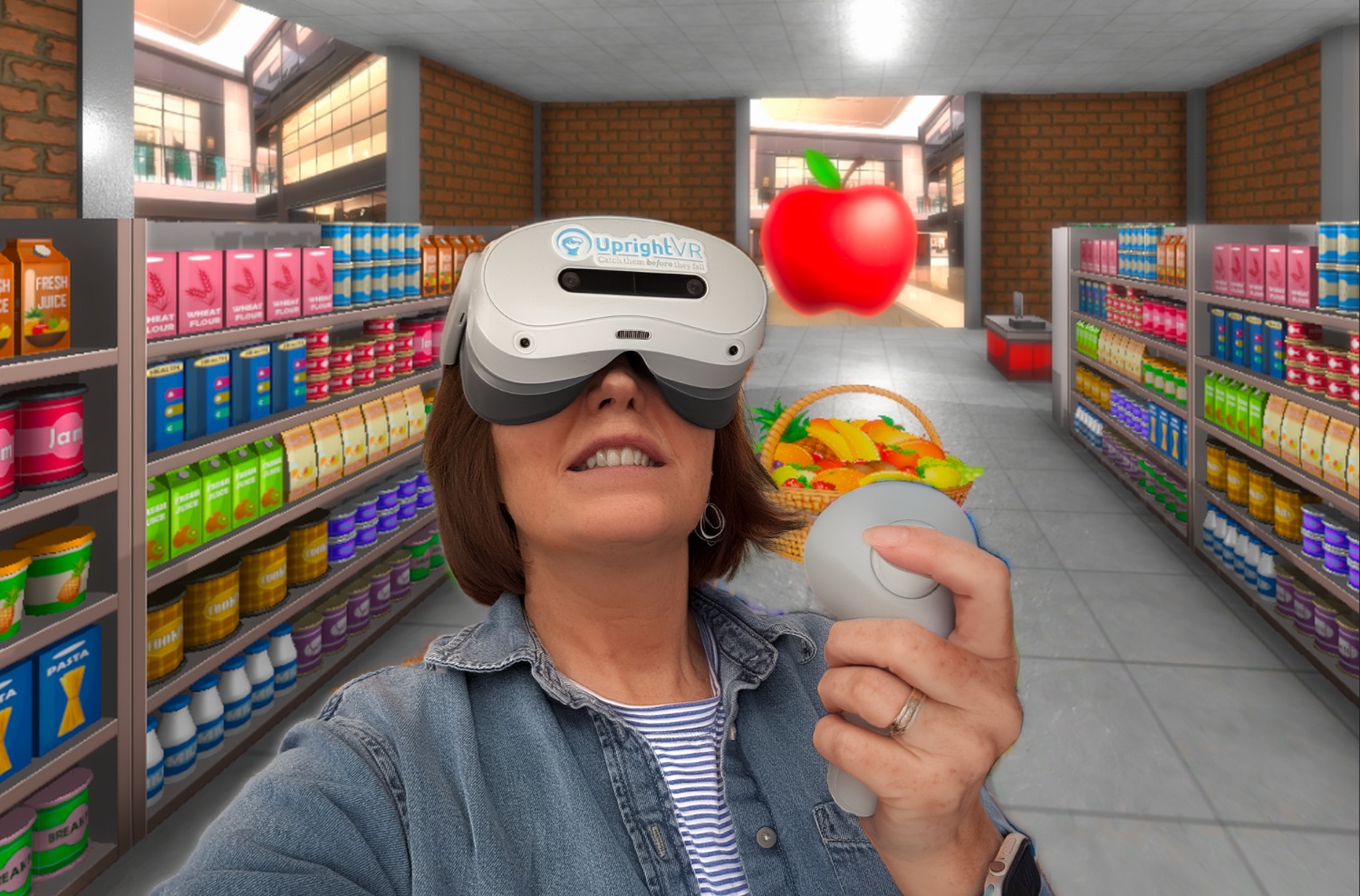
A patient may perform adequately during a simple clinic balance test but struggle significantly in visually busy environments such as grocery stores, crowded hallways, or community settings. VR rehabilitation environments may help therapists safely introduce these types of challenges in more controlled ways.

Immediate Feedback and Progressive Challenge

Many VR rehabilitation systems also provide real-time feedback, measurable performance tracking, and progress monitoring that may help improve patient awareness and movement consistency during rehabilitation tasks.

Virtual reality environments also allow therapists to progressively increase challenge through environmental complexity, movement demands, sensory conflict, and dual-task activities while still maintaining controlled rehabilitation conditions.

VR Rehabilitation and Balance Training

Balance rehabilitation is one of the most rapidly growing applications of VR in physical therapy.

This is likely because balance itself depends heavily on sensory integration, environmental interaction, vestibular processing, motor planning, and visual input. Virtual reality environments can challenge these systems in ways that are difficult to replicate consistently using traditional rehabilitation tools alone.

VR Allows Therapists to Create Sensory Conflict

Many patients compensate effectively in controlled clinic environments but struggle significantly when sensory information becomes unreliable or conflicting.

Virtual reality rehabilitation environments may help therapists introduce visual motion, environmental distractions, sensory conflict, and dual-task demands that more closely simulate real-world balance challenges. This may help identify impairments that are not always obvious during standard observational testing.

Objective Balance Assessment and Outcome Tracking

Many rehabilitation-focused VR systems also include objective balance assessment features that allow clinicians to measure postural stability, identify sensory integration deficits, track measurable changes over time, and support reassessment comparisons across visits.

This may help reduce variability between clinicians while supporting more measurable rehabilitation outcomes.

VR Technology Supports Clinical Decision Making

One concern sometimes raised about VR rehabilitation is whether technology risks replacing therapists’ expertise. In reality, successful VR integration still depends heavily on clinical reasoning.

Virtual reality systems cannot replace a therapist’s judgment, differential diagnosis, treatment progression, patient communication, or exercise prescription. Instead, VR rehabilitation technology should be viewed as a clinical tool that supports a therapist’s decision making.

The therapist remains responsible for selecting appropriate interventions, progressing treatment, interpreting patient responses, identifying underlying impairments, and adapting rehabilitation plans.

Technology does not replace the therapist. It expands the tools available to the therapist.

Not All VR Rehabilitation Systems Are the Same

As VR becomes more common in healthcare, clinics are increasingly evaluating different rehabilitation technologies. However, not all VR systems are designed for clinical rehabilitation.

Some systems focus primarily on entertainment or generalized movement experiences, while rehabilitation-focused systems are designed around:

  • objective measurement
  • therapist workflows
  • measurable outcomes
  • patient progression
  • sensory integration principles

Questions PT Clinics Should Ask When Evaluating VR Systems

When evaluating VR rehabilitation technology, physical therapists should consider:

  • Does the system provide objective assessment capabilities?
  • Can patient progress be tracked over time?
  • Does the system support vestibular and balance rehabilitation?
  • Is the platform designed for therapist workflows?
  • Does the system generate measurable outcome data?

These questions often matter more than graphics quality or entertainment value.

The Future of VR Rehabilitation in Physical Therapy

Virtual reality is unlikely to replace traditional rehabilitation methods entirely. Instead, many clinics are exploring how immersive rehabilitation technology may complement existing treatment approaches.

As rehabilitation continues emphasizing measurable outcomes, patient engagement, individualized treatment, data-supported care, and therapist efficiency, VR rehabilitation technology will likely continue evolving alongside those priorities.

Research surrounding virtual reality rehabilitation is also expanding rapidly, particularly in neurological rehabilitation, vestibular rehabilitation, post-concussion rehabilitation, balance training, and motor learning.

For many physical therapists, the conversation is no longer: “Will VR enter rehabilitation?”

The conversation is increasingly becoming: “How can VR be used most effectively within rehabilitation?”

Frequently Asked Questions About VR Rehabilitation

Can VR rehabilitation improve patient engagement?

Some clinicians report that immersive rehabilitation environments may improve therapy participation, exercise repetition, and adherence by creating more interactive rehabilitation experiences

Virtual reality rehabilitation may be particularly useful in vestibular rehabilitation because therapists can introduce visual motion, sensory conflict, and controlled environmental challenges in standardized ways.

Clinical VR systems are typically designed around rehabilitation workflows, measurable outcomes, therapist-guided progression, and objective assessment rather than entertainment alone.

Yes. Many rehabilitation-focused VR systems include balance assessment and rehabilitation features designed to challenge sensory integration, postural control, and movement coordination.

The Problem with Subjective Balance Testing in Physical Therapy

Balance assessment is a cornerstone of rehabilitation. Whether working with older adults, vestibular patients, neurological conditions, or athletes returning to play, physical therapists rely on balance testing to guide treatment decisions and measure progress over time.

Yet balance assessment presents a challenge that many clinicians recognize intuitively but may not openly discuss: variability.

Two therapists can evaluate the same patient using the same balance test and arrive at very different conclusions. 

One clinician may identify significant instability and vestibular involvement, while another may classify the patient as only mildly impaired. Even within the same clinic, balance assessment results can vary depending on clinicians’ experience, specialization, interpretation, and the testing environment.

This variability is not a reflection of poor clinical care. In many cases, it is a limitation of subjective balance testing methods and the complexity of balance itself.

As virtual reality rehabilitation technology becomes more common in physical therapy, many clinics are exploring how objective balance assessment tools may help improve consistency, measurable outcomes, and patient engagement.

Key Takeaways

  • Balance assessments can vary significantly between clinicians
  • Traditional observational testing has important limitations
  • Objective assessment tools may improve consistency and measurable outcomes
  • VR rehabilitation technology can help standardize testing environments
  • Technology should support, not replace, clinical expertise

Why Balance Assessment Is So Complex

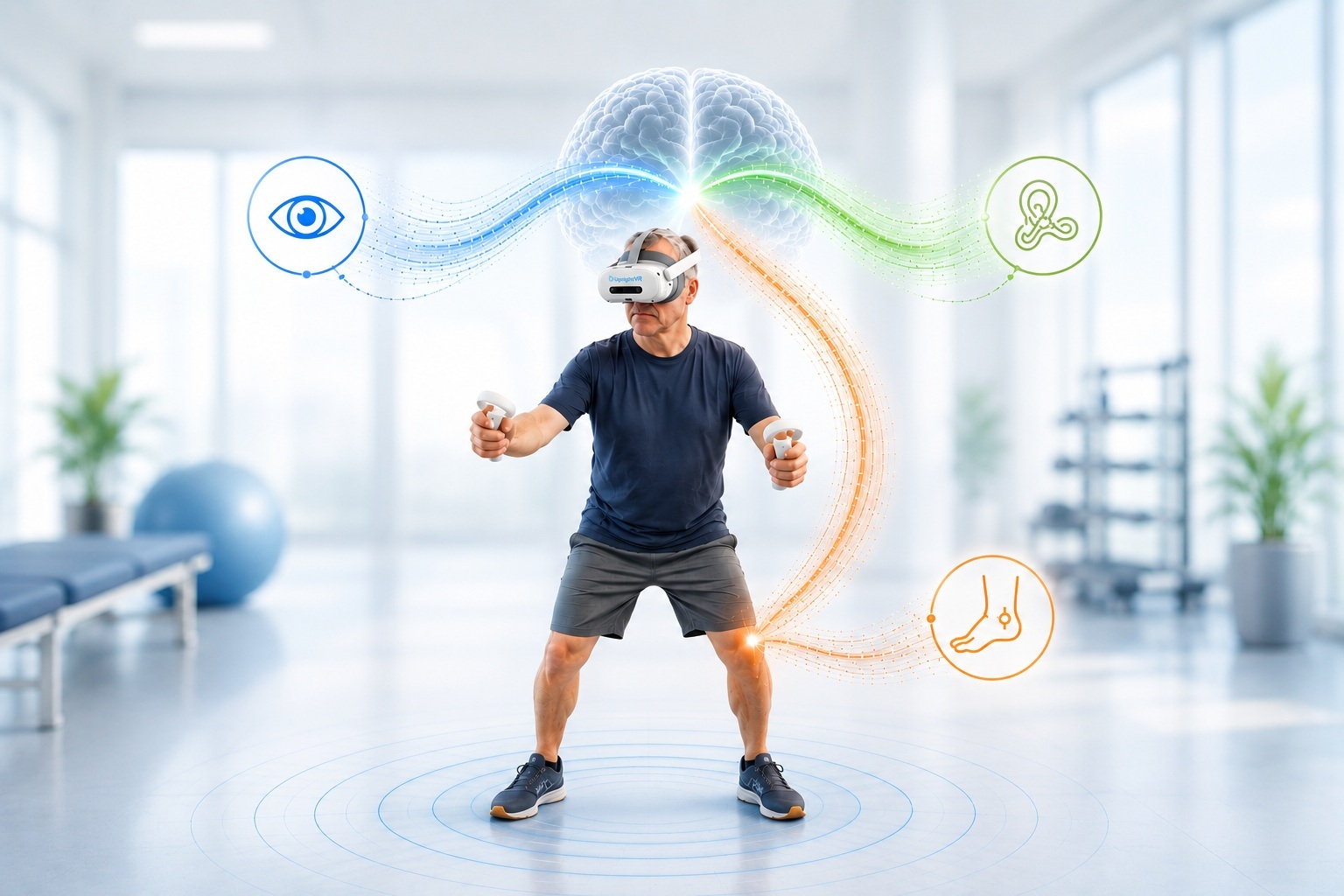
Balance is not a single system. It is the result of continuous integration between multiple sensory and motor systems working together in real time.

To maintain stability, the body relies on:

  • Vision
  • Vestibular input
  • Somatosensory feedback
  • Central nervous system processing
  • Motor control strategies

Even subtle impairments in one system can significantly alter postural control and movement patterns. This complexity creates an important clinical challenge: many balance deficits are not immediately obvious during routine observation. 

Patients may compensate effectively in straightforward environments while still struggling with sensory conflict, visually busy environments, head movement, dual-task activities, or dynamic postural demands. 

A patient who appears stable during basic clinic testing may still experience instability during real-world functional tasks. This is one reason balance assessment often depends heavily on clinician interpretation and experience.

Why Balance Testing Results Can Vary Between Clinicians

Clinical Experience Influences Interpretation

Clinical experience matters tremendously in rehabilitation. An experienced vestibular therapist may notice subtle compensatory behaviors, sensory weighting patterns, or movement strategies that a newer clinician could easily miss.

This is especially true when evaluating:

  • vestibular dysfunction
  • sensory integration impairments
  • visual dependence
  • mild neurological deficits
  • post-concussion balance changes

For example, two therapists may administer the same paper-and-pencil based balance assessment to a patient. One therapist may observe increased reliance on vision, delayed postural reactions, or vestibular compensation strategies, while another may simply record the final score without identifying the underlying contributors to instability.

The issue is not that one therapist is “wrong”. The issue is that many traditional balance assessments rely heavily on observation and interpretation.  That introduces variability.

Why Inter-Rater and Intra-Rater Reliability Matter

In rehabilitation, inter-rater reliability refers to the consistency of measurements among clinicians, whereas intra-rater reliability refers to the consistency of one clinician’s test and retest measurements when given the same information or clinical presentation. 

Both are important considerations in balance assessment.

When assessments produce significantly different interpretations between clinicians, or even inconsistent interpretations by the same clinician over time, several challenges can emerge: 

  • inconsistent treatment planning
  • difficulty measuring progress over time
  • reduced confidence in outcome data
  • difficulty demonstrating treatment effectiveness

This variability is not necessarily a reflection of poor clinical skill.  Human observation is inherently complex, particularly when evaluating subtle movement patterns, sensory integration impairments, or vestibular compensation strategies in busy clinical environments. 

This becomes especially important in clinics with multiple therapists, varying levels of vestibular training, rotating staff, and high patient volumes. 

As healthcare continues shifting toward measurable outcomes and value-based care, the ability to standardize balance assessment becomes increasingly valuable. The goal is not to replace clinical reasoning. Rather, the goal is to support clinical reasoning with more objective and repeatable data.

The Limitations of Subjective Balance Testing

Common Balance Assessments Used in Physical Therapy

Traditional balance assessments remain valuable tools within rehabilitation. Tests such as the mCTSIB, Berg Balance Scale, Dynamic Gait Index, Functional Gait Assessment, and Timed Up and Go have provided clinicians with practical ways to screen and evaluate patients for years.

Many of these tools were intentionally designed to be fast, practical, and easy to administer. However, those same strengths can also create limitations.

The Strengths and Weaknesses of Traditional Balance Assessments

Many traditional assessments rely on:

  • observational scoring
  • timed completion
  • pass/fail interpretation
  • broad functional categories

These approaches can make it difficult to detect subtle impairments or quantify small changes over time.

Research surrounding the modified Clinical Test of Sensory Integration on Balance (mCTSIB), for example, has demonstrated both strengths and limitations in identifying sensory integration impairments and predicting falls. Some studies have shown that more advanced sensory conflict conditions can reveal deficits that simpler eyes-open or eyes-closed testing may miss.

This is particularly important because balance deficits do not always appear under straightforward testing conditions. Patients may compensate effectively until sensory information becomes unreliable or conflicting.

Why Subtle Balance Deficits Are Often Missed

Many patients develop compensatory strategies that allow them to appear stable in controlled clinic environments. However, those same patients may struggle significantly when visual input is altered, head movement is introduced, cognitive load increases, or environmental complexity changes.

This is one reason therapists working in vestibular rehabilitation and neurological rehabilitation often rely on more advanced sensory integration testing and functional observation.

In these situations, observational testing alone may not fully capture the underlying impairment.

Why Objective Balance Assessment Matters

Moving Beyond Observational Scoring

Validated paper-and-pencil balance assessments, such as the Berg Balance Scale, Tinetti, and Timed Up and Go, remain valuable clinical tools that provide important objective information in rehabilitation practice.  

However, instrumented balance assessment can provide clinicians with additional layers of measurable performance data that may help improve consistency, accuracy, and confidence while reducing some of the subjectivity inherent in observational interpretation.

Instrumented balance assessment systems can help clinicians:

  • standardize testing conditions
  • quantify movement patterns
  • reduce observational variability
  • track measurable changes over time

This becomes especially useful when reassessing patients across multiple visits or providers.

For example:

  • Did the patient actually improve? Was the change clinically meaningful?
  • Is instability increasing under sensory conflict conditions?
  • Is vestibular compensation occurring?
  • Are improvements consistent across testing environments?

Instrumented measurement allows therapists to move beyond broad observational categories and toward more precise outcome tracking.

The Value of Measurable Outcome Data

Instrumented testing may also support communication with:

  • referring providers
  • payers
  • clinic leadership
  • patients themselves

Patients often respond positively when they can visualize measurable progress rather than simply hearing that they are “doing better”.

Clinics are also increasingly expected to demonstrate measurable outcomes and data-supported care. Instrumented balance assessment tools may help meet these expectations by enabling more standardized and repeatable testing.

Importantly, the goal is not to replace therapist expertise or clinical reasoning.  Rather, the goal is to provide therapists with additional objective information that can support more informed rehabilitation decision-making.

How Virtual Reality Is Changing Balance Assessment

How VR Rehabilitation Creates Standardized Testing Conditions

Virtual reality is becoming an increasingly valuable rehabilitation tool because it allows clinicians to create controlled, repeatable, and measurable testing environments that may be difficult to replicate through traditional observational assessments alone.

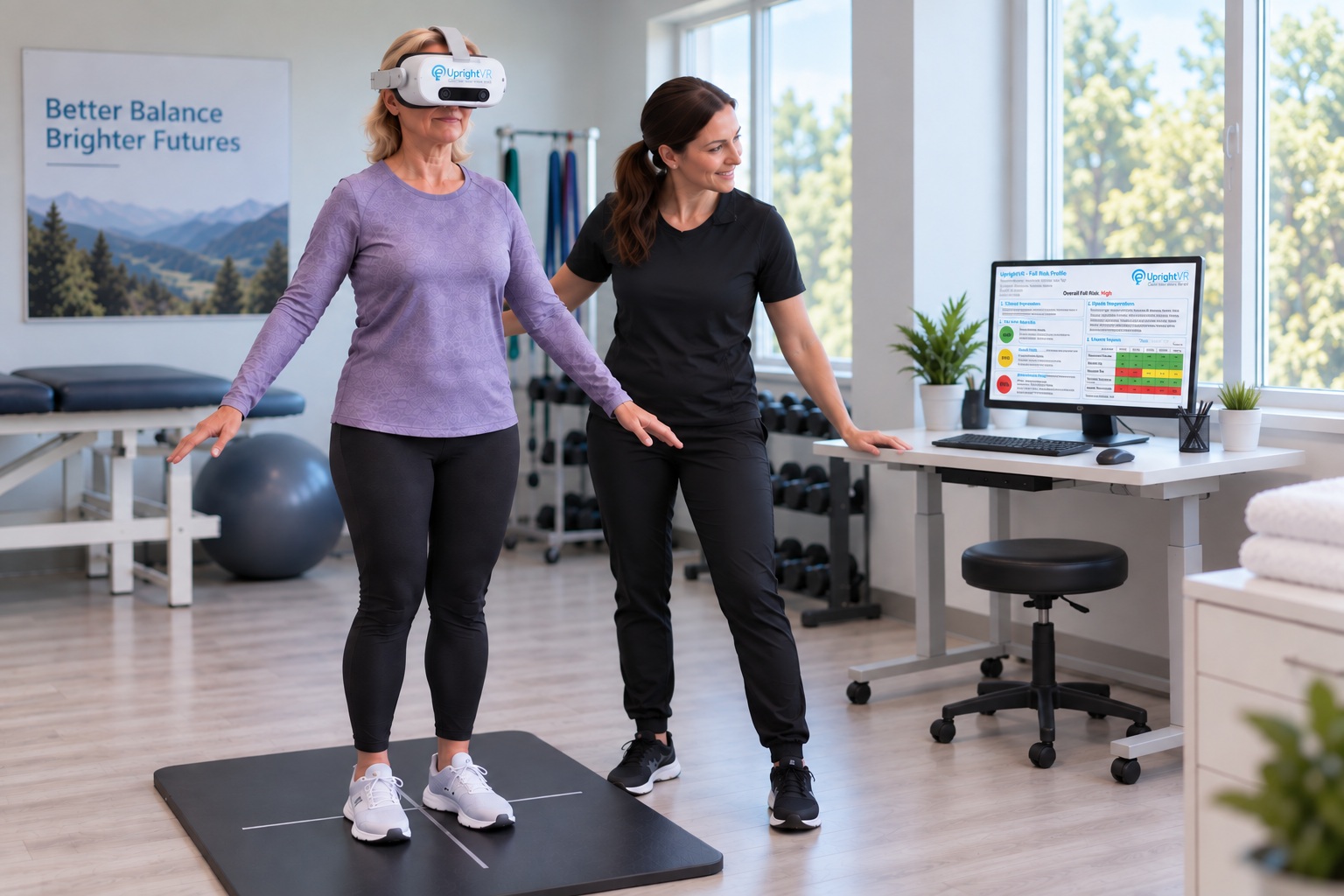
In physical therapy, VR-based balance assessment systems can help standardize sensory conditions, reduce environmental variability, and generate objective performance data during testing and rehabilitation.

Rather than relying entirely on subjective observation, therapists can use VR rehabilitation technology to:

  • quantify balance performance
  • identify sensory integration deficits
  • track measurable changes over time

Why Immersive Rehabilitation Environments Matter

Virtual reality also allows clinicians to challenge patients in immersive environments that more closely simulate the demands of real-world balance. This may reveal impairments that are not always apparent during traditional static testing conditions.

Immersive rehabilitation environments may also improve patient engagement, treatment adherence, therapy participation, and rehabilitation dosage. As virtual reality rehabilitation technology continues evolving, many clinics are exploring how immersive rehabilitation systems may support both assessment and rehabilitation outcomes.

VR Technology Supports — Not Replaces — Clinical Expertise

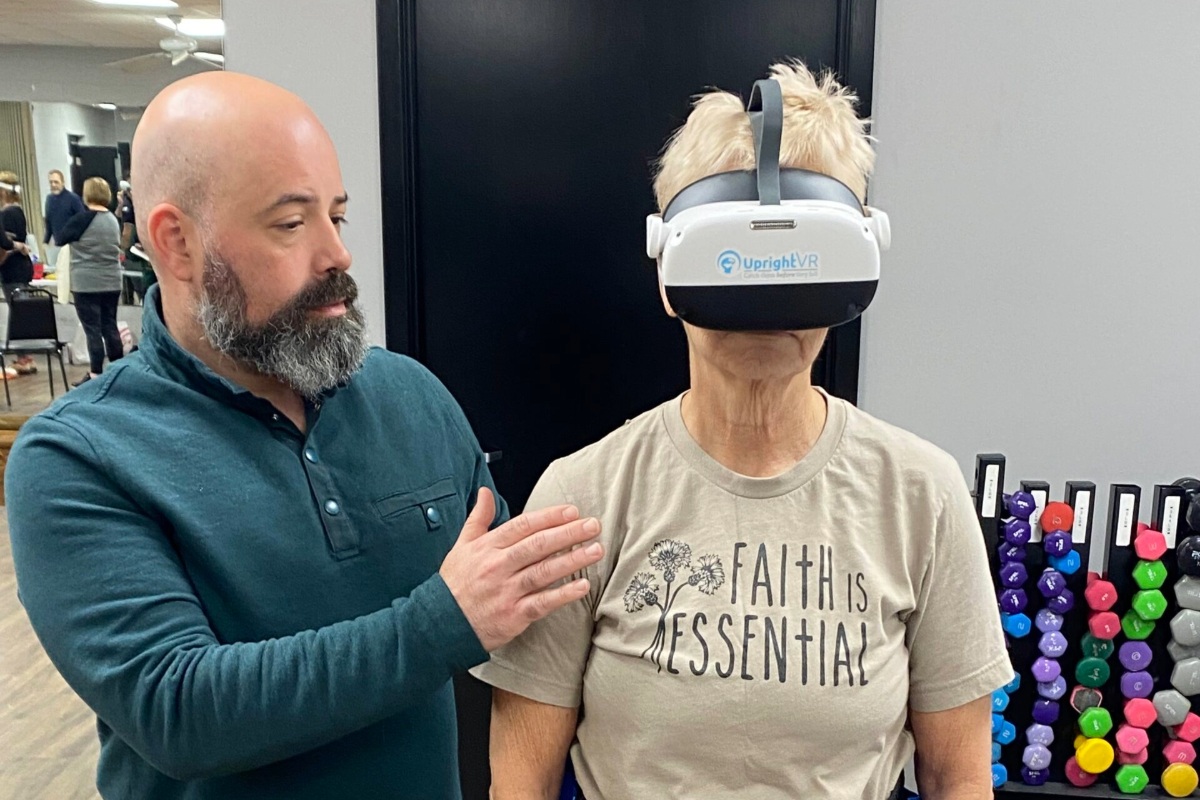
Importantly, VR technology is not intended to replace therapist expertise. Instead, it serves as a tool that can enhance clinical decision-making by combining objective measurement with therapist observation and clinical reasoning. Instrumented VR systems may also support newer therapists through more standardized assessment approaches while reducing some of the cognitive burden experienced by clinicians managing heavy caseloads in busy clinical environments.  

As VR physical therapy and rehabilitation technology continue evolving, therapists remain central to:

  • patient evaluation
  • treatment progression
  • exercise prescription
  • differential diagnosis
  • patient education

The Importance of Measuring Underlying Systems

Balance Impairment Is Not a Diagnosis

One of the biggest challenges in balance rehabilitation is that poor balance itself is not a diagnosis.

Balance impairment may result from:

  • vestibular dysfunction
  • visual dependence
  • somatosensory deficits
  • sensory integration impairments
  • neurological dysfunction
  • central processing changes
  • post-concussion changes
  • musculoskeletal limitations

Two patients may perform similarly on a functional balance test while having completely different underlying deficits. This is where more advanced balance assessment becomes clinically valuable.

Rather than only asking: “Can the patient maintain balance?”

Therapists can begin asking:

  • Which systems are contributing to instability?
  • Under what conditions does instability increase?
  • How does the patient respond to sensory conflict?
  • Are compensatory strategies present?
  • Is visual dependence influencing performance?

These questions allow for more targeted rehabilitation planning and potentially more efficient treatment progression!

Why Measurable Outcomes Matter in Physical Therapy

Why Clinics Are Prioritizing Objective Outcome Tracking

Healthcare is increasingly emphasizing measurable outcomes and data-supported care. Clinics are expected to demonstrate treatment effectiveness, track patient progress, and justify rehabilitation interventions more clearly than ever before.

Objective balance assessment and rehabilitation technology can help support these goals by providing:

  • repeatable testing conditions
  • quantifiable performance data
  • more precise documentation

This is particularly valuable in vestibular rehabilitation, neurological rehabilitation, and balance-focused physical therapy, where subtle functional changes may not always be apparent through observation alone.

How Measurable Outcomes Improve Patient Engagement

Patients also benefit from measurable outcome tracking. When patients can visualize progress through objective data, they often gain greater confidence and engagement in the rehabilitation process.

This can improve:

  • adherence to therapy
  • motivation
  • confidence during rehabilitation
  • long-term participation in treatment plans

The Future of Balance Assessment in Rehabilitation

Rehabilitation is increasingly moving toward:

  • measurable outcomes
  • data-supported decision making
  • standardized assessment
  • individualized treatment planning
  • technology-assisted rehabilitation

Balance assessment is evolving alongside these trends.

As clinicians continue working with increasingly complex patient populations—including vestibular disorders, neurological conditions, concussion, aging adults, and post-surgical patients—the demand for more precise and repeatable assessment tools will likely continue to grow.

At the same time, patient expectations are changing. Patients increasingly expect measurable progress, personalized rehabilitation treatment experiences, and data-driven care. 

Clinics are also under pressure to improve efficiency, demonstrate outcomes, differentiate services, and support therapist consistency. 

Objective balance assessment and VR rehabilitation technology may help bridge many of these needs by combining clinical expertise with measurable performance data.

Moving Toward More Consistent Care

Balance assessment will likely always involve some degree of clinical interpretation because human movement itself is complex. But improving consistency between clinicians is an important step toward advancing rehabilitation quality and confidence in patient care.

The goal is not perfect standardization at the expense of clinical reasoning.

The goal is to provide therapists with tools that help reduce variability, identify subtle impairments, and support more informed rehabilitation decisions.

As rehabilitation technology continues to evolve, objective balance assessment and virtual reality rehabilitation systems may play an increasingly important role in helping clinics deliver more precise, measurable, and individualized care.

Frequently Asked Questions About Balance Assessment and VR Rehabilitation

Why do balance assessments vary between physical therapists?

Balance assessments can vary between clinicians because many traditional balance tests rely heavily on observation and interpretation. Therapist experience, vestibular training, environmental conditions, and patient presentation can all influence how results are interpreted.

Traditional balance assessments are often designed to be fast and practical, but many rely on observational scoring or broad functional categories. This can make it difficult to detect subtle impairments or quantify small changes in patient performance over time.

Instrumented balance assessment refers to the use of measurable performance data to evaluate balance and postural stability. These systems may help reduce variability between clinicians by standardizing testing conditions and tracking measurable changes over time.

Virtual reality rehabilitation systems can support balance training, vestibular rehabilitation, neurological rehabilitation, motor learning, and patient engagement. Some VR rehabilitation platforms also include objective assessment and measurable outcome tracking features.

Some clinicians report that immersive rehabilitation environments may improve therapy participation, exercise repetition, and patient confidence by creating more interactive rehabilitation experiences.

Virtual reality may be particularly useful in vestibular rehabilitation because therapists can introduce visual motion, sensory conflict, and controlled environmental challenges in standardized ways that are difficult to replicate consistently in traditional clinical settings.

No. VR rehabilitation technology is designed to support clinical decision making—not replace therapist expertise. Physical therapists remain responsible for patient evaluation, treatment progression, exercise prescription, and clinical reasoning.

Healthcare is increasingly emphasizing measurable outcomes and data-supported care. Clinics are expected to demonstrate treatment effectiveness, track patient progress, and support more objective documentation and reporting of rehabilitation.