
UprightVR is a clinically validated virtual reality system that helps physical therapy clinics assess balance deficits, deliver gamified targeted rehabilitation, and track measurable outcomes – all in one integrated VR system.
Help patients regain stability while equipping therapists with advanced balance assessment and rehabilitation tools that will set your clinic apart.
Most clinics rely on subjective balance assessments that can vary between clinicians, making it difficult to consistently identify underlying balance deficits and measure patient progress with confidence.
UprightVR is more than an assessment tool – it’s a complete balance system designed to standardize assessments, guide targeted rehabilitation, and deliver measurable outcomes across clinicians and experience levels.
Using immersive virtual reality and objective balance testing, UprightVR helps therapists identify the underlying causes of imbalance and deliver engaging rehabilitation experiences that keep patients motivated and actively involved in therapy.

• Outpatient physical therapy clinics
• Neurological rehabilitation providers
• Vestibular therapy specialists
• Orthopedic and post-surgical rehab programs

• Older adults at risk of falls
• Neurological conditions (stroke, Parkinson’s, TBI)
• Vestibular and dizziness disorders
• Post-injury or post-surgical patients(/br>
UprightVR combines balance assessment, rehabilitation, and progress tracking into a single clinical workflow.
Identify and quantify balance deficits in a quick 8-minute assessment.
Deliver gamified, condition-specific therapy designed to address identified balance deficits, and improve:
Reassess patients over time and demonstrate outcomes for patients and payers:


UprightVR was developed by Dr. Wright, Professor of Neuromotor Science at Temple University, and is backed by more than two decades of balance and sensory integration research.
UprightVR evaluates how visual, vestibular, and somatosensory systems interact to maintain balance, helping clinics objectively identify and treat the root causes of instability.
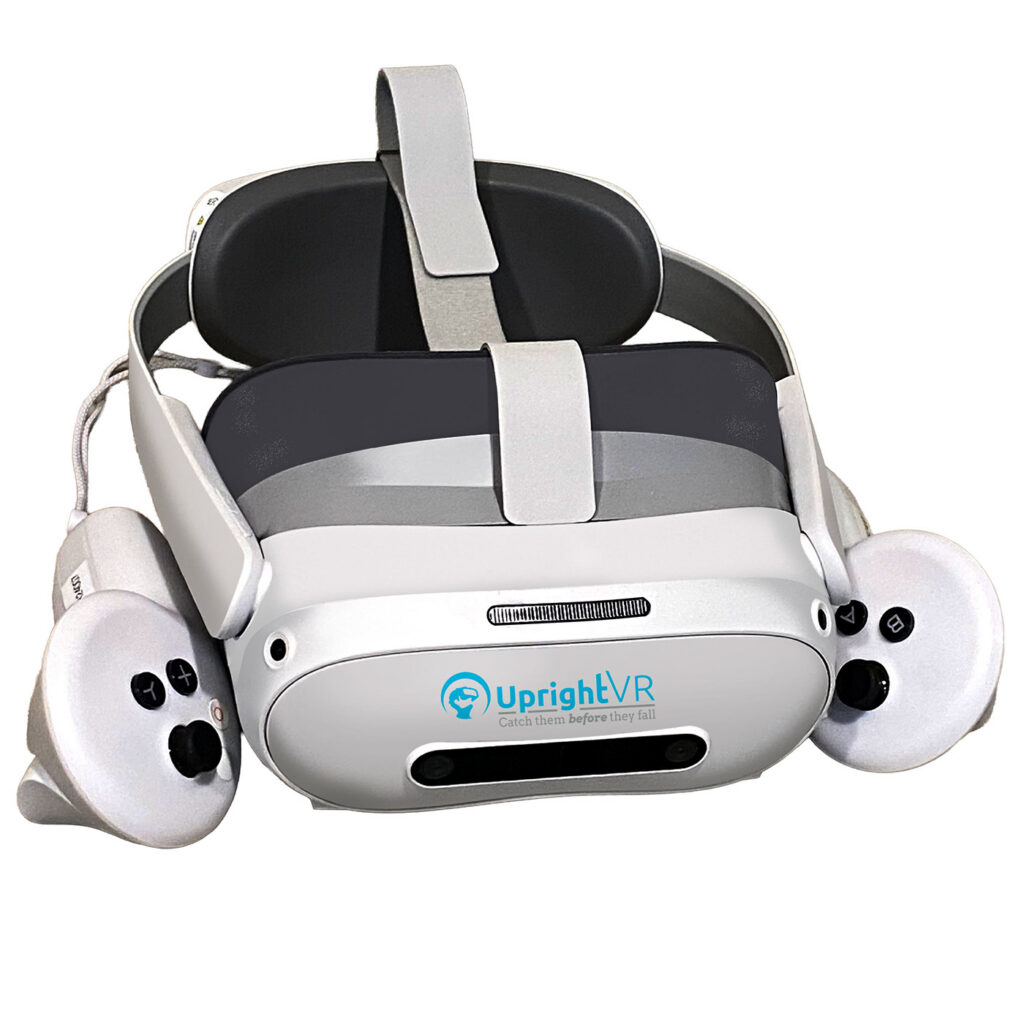
UprightVR combines assessment, rehabilitation, and analytics into a single integrated system:

“UprightVR’s SafetyNetTM tool exceeded everyone’s expectations and our residents responded enthusiastically to the technology. For our staff, it’s given us invaluable insights that can be leveraged to keep our residents at their safest and healthiest.“

Before UprightVR, we would not have known there were issues until after a fall. Now, we can be proactive in decreasing fall risk.

Taking the test makes you aware of your risks. Following therapy, and a very positive re-test, my confidence in my balance has greatly increased.

The ongoing use of UprightVR will impede future falls and enable residents to stay healthy, active, and independent.
Yes. UprightVR is used in physical therapy to assess fall risk by objectively evaluating key balance systems, including vision, vestibular function, somatosensory input, and sensory integration.
It provides measurable data that can help identify patients at higher risk of falls, especially older adults and those with neurological or vestibular conditions. This allows therapists to make more informed clinical decisions and tailor interventions more precisely.
UprightVR is designed to complement traditional assessments and clinical judgment.
UprightVR measures postural sway and balance performance with high precision during various tasks and sensory challenges.
Using advanced sensors within the headset, including inertial measurement units, gyroscopes, accelerometers, and cameras, it can detect movement changes as small as 1 mm.
The system helps quantify how a person uses visual, vestibular, somatosensory, and sensory-integration inputs to maintain balance. This provides clinicians with objective data to identify deficits, track progress, and guide treatment.
UprightVR assessments are designed to be fast and clinic-friendly. Our flagship VR-SIB (Virtual Reality Sensory Integration in Balance) assessment takes less than 8 minutes to complete.
We also offer multiple additional balance assessments that can be performed in under 5 minutes. This allows clinicians to gather objective data efficiently without disrupting workflow.
Yes. UprightVR was designed with physical therapy clinics in mind.
The platform focuses on efficiency, streamlined workflows, and ease of use, enabling seamless integration into daily clinical operations. Assessments are fast, practical, and built for real-world patient volume. This helps clinics deliver advanced balance testing without slowing down care.
UprightVR is especially beneficial for patients with known or suspected balance impairments, including older adults, individuals with neurological conditions, and those experiencing balance issues after medical procedures.
It is also valuable for patients with dizziness, vestibular dysfunction, or a history of falls. Because the system is highly sensitive, it can detect subtle balance deficits across a wide range of populations. This helps clinicians intervene earlier, improve balance, and reduce fall risk before larger problems develop.
Select a date and time that works for you.