
Successful rehabilitation requires more than a well-designed treatment plan. Even the most evidence-based interventions depend on one critical factor: patient participation.
Physical therapists understand this challenge well. Patients often begin therapy motivated and optimistic, but maintaining engagement over weeks or months of rehabilitation can be difficult. Missed appointments, inconsistent home exercise performance, and declining motivation can all limit progress and ultimately affect outcomes.
This challenge is particularly important in balance rehabilitation, vestibular rehabilitation, neurological rehabilitation, and concussion recovery, where meaningful improvements often require repetition, progressive challenge, and long-term adherence.
As rehabilitation technology continues to evolve, many clinics are exploring how virtual reality rehabilitation can improve patient engagement, increase participation, and support better rehabilitation outcomes.
Key Takeaways
- Patient engagement and adherence are critical drivers of rehabilitation outcomes.
- Many patients struggle with motivation, consistency, and long-term participation in therapy.
- Virtual reality rehabilitation may improve patient engagement by delivering immersive, interactive rehabilitation experiences that are motivating, enjoyable, and grounded in scientific evidence.
- Real-time feedback, objective progress tracking, and progressive challenges can help improve adherence.
- For balance and vestibular rehabilitation, virtual reality can provide controlled sensory challenges while supporting patient participation.
Why Patient Adherence Matters in Rehabilitation
Rehabilitation outcomes are closely tied to consistency and dosage. Patients must participate in therapy long enough and often enough to create meaningful change.
Research examining balance training and fall prevention has found that over 50 hours of balance-focused exercise may be needed to significantly reduce fall risk. This total includes both supervised therapy and independent exercise outside the clinic. Achieving this level of participation can be challenging for many patients.
This concept extends beyond balance rehabilitation. Whether treating vestibular dysfunction, neurological impairments, orthopedic injuries, or post-concussion symptoms, patients generally require repeated exposure to therapeutic activities in order to improve motor control, develop new movement strategies, and build confidence.
The most effective treatment plan cannot produce results if patients do not remain engaged long enough to receive an adequate therapeutic dose.
Why Patients Struggle to Stay Engaged
Patient disengagement rarely stems from a lack of effort. More often, it reflects common barriers that therapists encounter every day.
Patients Don’t Believe They Are at Risk
Research examining falls prevention participation found that many older adults do not view themselves as being at risk for falls, even when objective risk factors are present. Others acknowledge that falls are serious but believe the consequences are more likely to affect someone else.
This disconnect can make it difficult for patients to fully commit to preventive rehabilitation programs.
Patients Don’t See Immediate Progress
Rehabilitation often involves gradual improvement rather than dramatic changes. Patients may become discouraged if they cannot clearly see how their efforts are contributing to progress.
When improvements are subtle or difficult to measure, motivation can decline, especially during longer rehabilitation programs. This challenge highlights the importance of using measurable outcomes and objective assessment tools to help patients visualize progress through rehabilitation.
Exercises Can Feel Repetitive
Balance, vestibular, and neurological rehabilitation frequently require repetition. While repetition is essential for motor learning, performing the same exercises repeatedly can sometimes reduce motivation and long-term adherence.
Fear Can Limit Participation
Patients experiencing dizziness, imbalance, motion sensitivity, or fear of falling may avoid activities that challenge them. Ironically, these are often the very activities needed to support recovery.
For therapists, the challenge becomes finding ways to sustain participation while creating a rehabilitation experience that feels meaningful, achievable, and motivating.
How Virtual Reality Creates a More Engaging Rehabilitation Experience
One reason virtual reality rehabilitation has gained attention in recent years is its potential to address many of the factors that contribute to poor adherence.
Unlike traditional exercise programs that may feel repetitive over time, virtual reality places patients inside immersive environments designed to encourage active participation.
While engagement alone does not guarantee better outcomes, it can influence several factors that contribute to successful rehabilitation.
Immersion Shifts Attention Toward Performance
Patients participating in traditional balance or vestibular exercises are often highly aware of their symptoms, fatigue, or fear of instability.
Virtual reality environments may help shift attention away from symptom monitoring and toward task completion. Instead of focusing on dizziness or imbalance, patients become focused on navigating a virtual environment, completing challenges, or achieving specific goals.
This shift in attention can create a more positive rehabilitation experience and encourage continued participation.
Real-Time Feedback Increases Motivation
Feedback is a critical component of motor learning.
Many virtual reality rehabilitation systems provide immediate feedback that allows patients to see how they are performing throughout a session. This feedback may include scores, progress indicators, task completion metrics, or visual demonstrations of improvement.
When patients can see measurable progress, they often develop greater confidence in the rehabilitation process.
Objective Progress Can Reinforce Participation
Patients are more likely to stay engaged when they can clearly see that their efforts are making a difference.
One challenge in rehabilitation is that progress is not always obvious. A patient may feel slightly more confident walking through a grocery store or experience less dizziness during daily activities, but those improvements can be difficult to quantify.
Objective performance measures can help bridge this gap. When patients can visualize improvements over time, they often gain confidence in both the rehabilitation process and their own abilities.
For therapists, measurable outcomes also provide valuable information that can guide treatment progression, support patient education, and help demonstrate the effectiveness of rehabilitation interventions.
As rehabilitation continues moving toward data-supported care, the combination of patient engagement and objective outcome tracking may become increasingly valuable.
Gamification Encourages Repetition
One of the biggest challenges in rehabilitation is obtaining sufficient repetition.
Virtual reality environments often incorporate game-like elements that encourage patients to perform more repetitions without focusing on the exercise itself. Rather than completing another set of balance activities, patients may focus on achieving a goal, navigating an environment, or improving a score.
This can make rehabilitation feel less repetitive while still delivering the therapeutic challenges necessary for progress.
Progressive Challenges Support Long-Term Participation
Effective rehabilitation requires progression.
One reason patients sometimes disengage from therapy is that exercises can become either too easy or too difficult. When activities no longer feel challenging, patients may become bored. When tasks feel overwhelming, frustration can limit participation.
Successful rehabilitation often occurs in the middle ground—where patients are challenged enough to promote adaptation and motor learning, but not so challenged that the task becomes discouraging.
Virtual reality rehabilitation platforms can help therapists continuously adjust task difficulty as patients improve. Rather than repeating the same exercise at the same level of difficulty, therapists can progressively introduce greater sensory conflict, visual complexity, cognitive demands, dual-task activities, and movement challenges.
This progressive approach helps maintain engagement while supporting the principles of motor learning and neuroplasticity. Patients remain actively challenged throughout their rehabilitation journey, making it easier to sustain participation and continue progressing toward their goals.
For balance and vestibular rehabilitation in particular, progressive challenge is often essential because the sensory and motor systems must continually adapt to increasingly complex environments. Technology that allows therapists to systematically increase difficulty may help support both engagement and long-term rehabilitation outcomes.
Why Virtual Reality May Be Especially Valuable for Balance and Vestibular Rehabilitation
Balance rehabilitation presents unique engagement challenges.
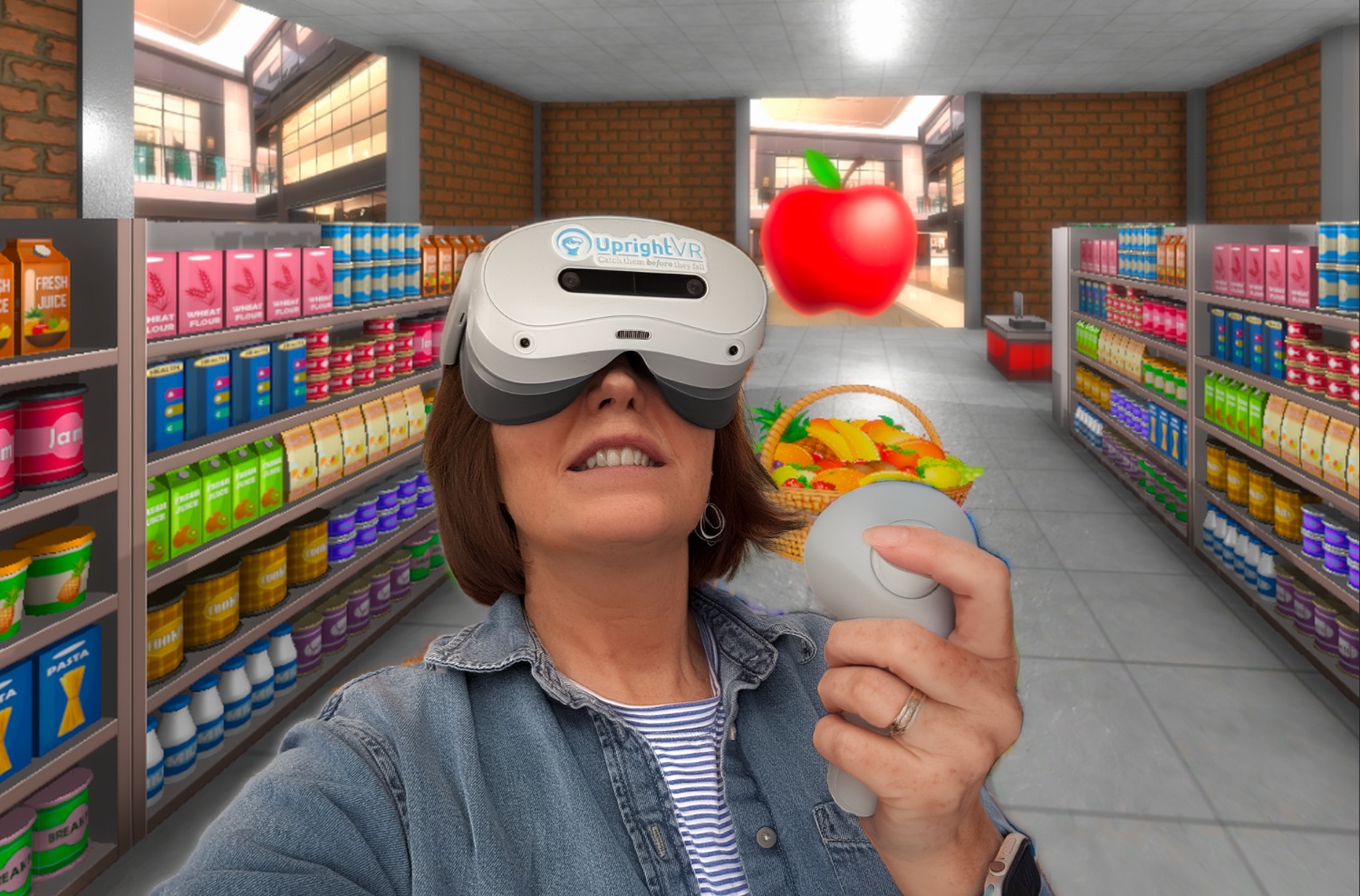
Patients with vestibular dysfunction, sensory integration impairments, concussion, or balance disorders often struggle most in visually complex environments such as grocery stores, airports, shopping centers, and crowded public spaces.
Traditional clinical exercises can address these deficits, but recreating these environments consistently can be difficult.
Virtual reality allows therapists to introduce visual motion, environmental complexity, sensory conflict, and cognitive demands within a controlled setting. Patients can safely practice responding to challenges that more closely resemble real-world situations.
This is particularly relevant because balance depends on effective sensory integration between visual, vestibular, and somatosensory systems. When these systems are challenged appropriately, therapists can target underlying deficits while keeping patients engaged in the rehabilitation process.
Some virtual reality rehabilitation systems can also combine immersive therapy with objective balance assessment and outcome tracking. This allows therapists to identify specific deficits, monitor progress over time, and tailor rehabilitation programs to the individual needs of each patient.
Engagement Alone Isn't the Goal
It is important to recognize that engagement is not the ultimate objective.
The goal is improved outcomes.
Patient engagement matters because it influences attendance, participation, exercise dosage, confidence, and adherence to treatment plans. These factors, in turn, may influence rehabilitation success.
Virtual reality should not be viewed as entertainment replacing therapy. Instead, it should be viewed as a clinical tool that helps therapists create meaningful experiences that support patient participation and treatment progression.
The therapist remains responsible for evaluation, exercise prescription, progression, patient education, and clinical decision-making.
Technology simply provides another tool that may help patients stay engaged long enough to achieve meaningful results.

Final Thoughts
Patient engagement remains one of the most important factors influencing rehabilitation success.
Even the most effective interventions require consistent participation, adequate dosage, and long-term adherence. As clinics continue searching for ways to improve outcomes, virtual reality rehabilitation offers an opportunity to create more immersive, motivating, and interactive patient experiences.
For balance and vestibular rehabilitation, virtual reality may offer an additional advantage by combining patient engagement with progressive sensory challenges and objective outcome tracking. This allows therapists to not only keep patients engaged, but also better understand whether rehabilitation is producing meaningful improvements over time.
In our next article, we’ll explore why measuring progress in vestibular and balance rehabilitation is often more complex than it appears—and how objective assessment tools can help therapists track meaningful change with greater confidence.
Frequently Asked Questions About Virtual Reality Rehabilitation and Patient Engagement
Does virtual reality improve patient engagement in physical therapy?
Virtual reality rehabilitation may improve patient engagement by creating immersive, interactive treatment experiences that encourage active participation. Many therapists find that patients are more willing to complete challenging rehabilitation activities when they are presented within engaging virtual environments rather than repetitive exercise routines alone.
Can virtual reality help improve adherence to rehabilitation programs?
Patient adherence depends on many factors, including motivation, confidence, perceived progress, and enjoyment of the rehabilitation process. Virtual reality may help improve adherence by providing immediate feedback, progressive challenges, measurable goals, and more engaging rehabilitation experiences that encourage patients to continue participating in therapy.
Why is patient engagement important in rehabilitation?
Patient engagement is closely linked to rehabilitation success because meaningful improvements often require consistent participation and sufficient exercise dosage. Patients who attend therapy regularly and actively participate in their rehabilitation programs are more likely to achieve their treatment goals than those who discontinue therapy prematurely.
Is virtual reality effective for balance rehabilitation?
Virtual reality has become an increasingly popular tool for balance rehabilitation because it allows therapists to challenge visual, vestibular, and somatosensory systems in controlled environments. Virtual reality can also introduce sensory conflict, visual motion, and real-world environmental challenges that may be difficult to recreate consistently using traditional rehabilitation methods.
How does virtual reality support vestibular rehabilitation?
Virtual reality may support vestibular rehabilitation by allowing therapists to systematically expose patients to visual motion, sensory conflict, and progressively complex environments. These controlled challenges can help patients improve sensory integration, reduce visual dependence, and build confidence in situations that might otherwise provoke dizziness or imbalance.
Does virtual reality replace the physical therapist?
No. Virtual reality rehabilitation technology is designed to support clinical decision-making, not replace it. Physical therapists remain responsible for patient evaluation, treatment planning, exercise prescription, progression, education, and clinical reasoning. Virtual reality is simply another tool that can help therapists deliver engaging and individualized rehabilitation experiences.
Can virtual reality help measure patient progress?
Some rehabilitation-focused virtual reality systems include objective assessment and outcome tracking capabilities. These tools may help therapists monitor changes in performance over time, identify specific deficits, track progress, and provide patients with measurable evidence of improvement throughout the rehabilitation process.